GamePlay
In Noir 1933, your roots define your reach. A character’s community is their greatest asset; a lifeline of resources, a means to reliable intel and - when the chips are down and the heat is rising - a refuge from the trials and tribulations of the City. As your character evolves, so does their neighborhood; your victories bring prosperity and pride to the streets that raised you. However, stepping beyond the streets you know brings a dose of cold reality: outside the comforts of home and the safety of your circle, gossip no longer passes freely, your name opens no doors, and the locals see in you no hero, just a two-bit punk from the wrong part of town…
Standard TTRPGs begin in a tavern, a disposable venue left behind in search of somewhere more adventurous. In Noir 1933, such spaces are never forgotten, but become instead places to protect and grow, and are foundational elements of our unique City Building system. When players create their Noir 1933 characters, they create in tandem the Neighborhood in which their hero lives and works, providing a local context for every choice and action. Our system showcases our commitment to portraying the myriad Neighborhoods of a living city, places where history and class, governments and power, ethnicity and culture, are not mere abstractions, but vital concerns that ground and motivate our heroes
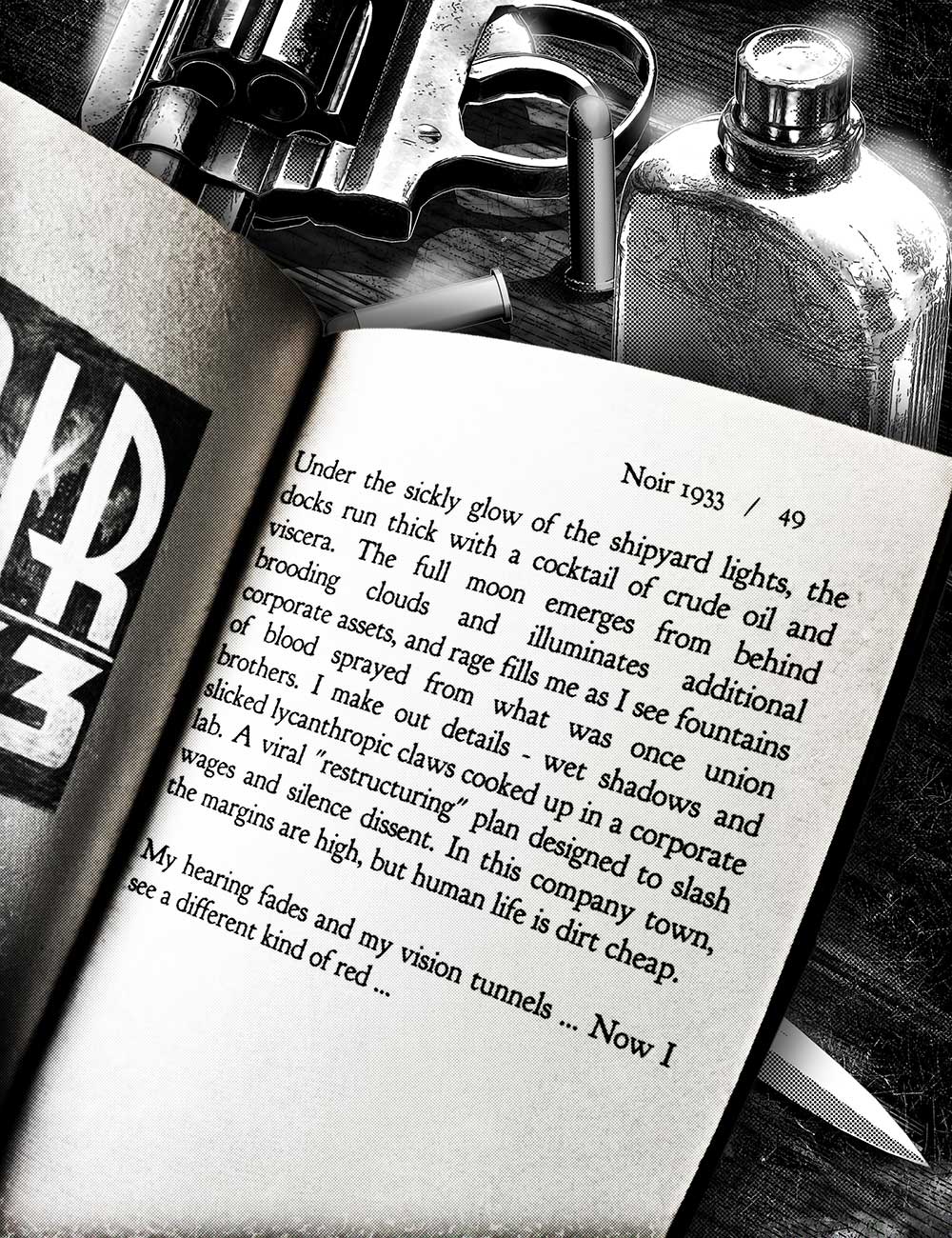
Thunder clapped like marching band cymbals. Rain pummeled my face from every direction. I strain to see through the bars pried wide on the armory window. A flash of lightning helps me spot the intruders heading for the basement, and the next minute I am through the opening, on their heels. Guards fall in their wake, looking up at me with vacant eyes from heads facing the wrong direction. The Friends of New Germany plan to steal the stash of rifles and machine guns for “the cause”. I’m the only one who can stop them.
Been a long time since I punched a Nazi, and the smile on my face reminds me how much I missed the feeling…
In game terms the relationship goes even deeper. Your Neighborhood is a fundamental part of your character; granting special abilities and resources – developing a network of newsstands widens the scope of a character’s intelligence, while bustling docks may import strange materials to develop mind and body. As you grow, your community grows with you. Engaging in your Neighborhood, performing missions that protect its people and defend its interests, see that investment returned with expanded resources, equipment, and a host of ways large and small that a community bolsters its supporters. But GMs are a part of the community as well, and through our system they can create influential Factions and forge narrative hooks that impact both character and Neighborhood development. Sure, the hero may build another speakeasy or a new theater to watch the latest newsreel, but this prosperity may allow the GM to slip a cult or two into the shadows…
Yet Neighborhoods and their heroes do not stand alone – In Noir 1933 there is strength in diversity, and great benefits flow from collective effort. This goes beyond a mere pooling of resources or information, embodied in Noir 1933’s Solidarity System. Here, heroes of vastly different backgrounds band together, compensating for their individual weaknesses and magnifying their powers in ways that would be impossible when working alone – a technological Gadgeteer finds a way to harness the unwieldy energies of a tormented Volatile hero. A Frankenstein-like Augment reconnects with their humanity through the soothing magics of a Mystic. A war-wounded Street Sharp lays the dead to rest through the wise counseling of an Initiate. No matter their background or class, a shared humanity joins our heroes together, a Solidarity that expands the borders of what constitutes community.
Noir 1933 features a more interactive morality system than other TTRPGs. Morality is a key part of the philosophy of the game, with our hero’s actions have both outward expression and inward consequences. Players track the toll of traumas not just in battle but in social situations as our heroes move amongst different populations and different classes. Changes in a hero’s morality may spur a negative response from their community, leaving the hero ostracized and affording them fewer benefits than a neighborhood usually grants. At the same time, the changing demands of a Neighborhood may have consequences for the hero, altering them over time as they struggle to be the force of vengeance or the spotless Savior their community needs.
While the fantastical nature of the Noir 1933 universe allows for the techno-wizardry of the Mastersmith, the mind-bending Mentalist, and the brute force of The Slugger (and pretty much any other classic Pulp hero you can think of), all Archetypes utilise our currency system called Sway. This influence-based currency is earned through Neighborhood building and undertaking specific missions. Sway gives a structure and a goal to player downtime, allowing them to interact, influence, and direct their communities towards common purposes. Multiple gaming sessions across a campaign allow players to accumulate Sway for use in and outside their communities. Sway allows players to extend their influence into other neighborhoods via alliances and cross-cultural programs that benefit all, to foster the plans of friendly Factions while impeding those set against the hero and their community.